Tuesday, June 7, 2011

A Warm Welcome to Choose MyPlate.gov


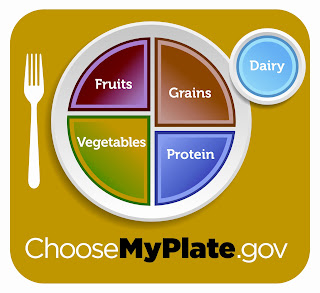
Last week the United States Department of Agriculture unveiled the new icon for following a healthy diet, Choose MyPlate.gov http://www.choosemyplate.gov/ This is intended to replace the last icon, MyPyramid, introduced in 2005. I am an instant fan of MyPlate. It is immediately understandable, even to elementary children. It contains proportionality, so we know to eat half our plate vegetables and fruits, and keep the other half grains and protein. What does need a little more explanation is that we want to teach eating more whole grains, or at least half our daily servings of grains. So, I think they could have labeled it whole grains instead. The other tricky part is: what is protein? Since it includes meats, poultry, fish, nuts, seeds, beans and legumes, I guess that is too much to fit in that small wedge.
Then there is the dairy circle. I am glad it is there, but it also now includes non-dairy soy products fortified with calcium and Vitamin D for our vegan dieters. Cheese, yogurt, and milk of course are included, even though it is not immediately discernable from the circle off the plate.
It is a great teaching tool nonetheless, and a great conversation starter. To further the discussion, USDA includes the following teaching points to get you on the road to a better diet:

Balancing Calories
Enjoy your food, but eat less.
Avoid oversized portions.

Foods to Increase
Make half your plate fruits and vegetables.
Make at least half your grains whole grains.
Switch to fat-free or low-fat (1%) milk.

Foods to Reduce
Compare sodium in foods like soup, bread, and frozen meals ― and choose the foods with lower numbers.
Drink water instead of sugary drinks.

Thursday, March 31, 2011

Family Meals and Children’s Diets- Healthy Progress?

If you are a parent of a school-aged child, you may be wondering are we, collectively as Americans, making any progress in improving family meals and children’s diets? The answer is both yes and no. New research published by the American Dietetic Association’s 2010 nationally representative survey of 1 ,193 pairs of parents and children ages 8-17 has looked at changes from 2003- 2010 and saw some positive changes. The amount of daily family meals eaten at home has increased, rising from 53% to 73%. This is good news, as previous research has shown meals eaten together at home are more nutrient dense and less in calories, fat, added sugar and sodium. They also promote stronger, healthier children and families. However, there are serious gaps in knowledge and behavior for most children and parents when it comes to healthy meals and snacks. The latest National Health and Nutrition Examination survey data still show the vast majority of children in this age group do not consume the recommended amounts of vegetables (90%), fruits (75%), dairy (50% boys, 90% girls), and whole grains (95%). When asked which food group they should eat the most servings from, less than 25% correctly identified grains, but 70% did know the least amount of food servings should come from fats and oils. Yet, 30% of children’s calories come from solid (unhealthy) fats and added sugars, such as sodas and sweet drinks, cakes, cookies, and fried foods (the U.S. Dietary Guideline’s goal is not more than 15%). Both children and parents believe it is important to eat healthy foods, and most think they are. Unfortunately, this current actual eating pattern negatively affects not only potential for healthy growth, but promotes excess weight gain, more risk for infection such as colds and flu due to decreased immune function, more absenteeism, and decreased academic performance. So why is there such a disconnect between parents and children believing they consume healthy diets and the reality of their actual intake? One major reason is that high calorie, less nutritious foods are more easily available and advertised, making them seem like the “normal standard,” and so easier to purchase and consume. This is especially true with children’s snacks. As new data show, children have increased snacking from once to twice a day, increased calories from 200 to 525, (largely from sugar and fat), and decreased vitamins and minerals in the past decade. Fortunately, the majority of parents and children both expressed the desire and value being healthy and want to learn to consume more nutritious foods. Youth and adults rate taste foremost in food selection, and then nutrition. Children and parents want to spend more quality time together, and these are all great opportunities to promote positive diet change. Here are some small steps to improve your family’s diet. Try a new one each week: • With spring here and summer approaching, consider planting a vegetable garden together and buying local, fresh fruit and vegetables at farmer’s markets. • Try a new fruit or vegetable each week. Encourage your child to help select, prepare and serve. Offering them as a snack often makes it easier for all to taste and accept. • When shopping, compare the Nutrition Facts labels and select foods that are lower in sodium, sugars, and fat. Look for 10% or more daily value of calcium, fiber or vitamins per serving. • Keep snack calories under 300 per serving and offer 2-3 food groups per snack. Low fat dairy (milk, yogurt, cheese) fruits, vegetables and whole grains are great choices. • Look for grains with whole grains listed as the first ingredient. • Offer water when your children are thirsty. • Check http://www.mypyramid.gov/ for more ideas, or contact Penn State Extension at http://www.extension.psu.edu/ for food and nutrition programs in your area.

Wednesday, February 2, 2011

New Family Fitness Educator Training

I am hosting another Family Fitness Educator Training on Saturday, March 12 in Selinsgrove at the Church of the Nazarene. We are offering the curriculum free; cost for the training is $20 and includes lunch. We are especially extending this training to community youth educators, community health educators, after school programs providers, teachers, and family educators of parents of children ages 8-12. Please share with anyone who may be interested.

Program training is limited to first 25 registrations. You can download a registration brochure from our county website at
http://northumberland.extension.psu.edu/
or call our office at 570-988-3950. Registration deadline March 4.

Kids Eat Right Healthy Diet Resources

Looking for more on-line reliable healthy family diet resources? I am a fan of the American Dietetic Association's new "Kids Eat Right" website. http://www.eatright.org/kids/

Tuesday, December 7, 2010

New PDA Food Safety Regulations Affects Certification Training
Effective January 22, 2011 new Pennsylvania Department of Agriculture regulations regarding food employee recertification will go into effect. These regulation changes include:
1. PDA will no longer be issuing state certification or recertification forms. After this time, individuals whose PDA Food Employee Certificate is up for renewal will be required to complete an approved food safety program and successfully pass the certification exam. In other words, everyone will have to retake the food safety certification exam every 5 years in order to meet PDA requirements. Penn State Extension offers the National Restaurant Association ServSafe food safety course, and the certificate you receive for passing the ServSafe exam will meet the PDA requirements for Food Protection Manager Certification.
2. In Pennsylvania, each licensed food establishment must have at least one supervisory employee who has Food Protection Manager Certification.
3. Each establishment must have a certified person who is accessible during all hours of operation.
For those food establishments and organizations who hold a food license in Pennsylvania, and have a PDA Food Employee Certificate with an expiration date sometime in 2011, you have about a 4 to 6 week window of opportunity to complete requirements for recertification without retaking the exam at this time.

Penn State Cooperative Extension in Northumberland County has a 1-day class for recertification on January 13, 2011 from 8:30 am-5:00 pm at the Penn State Extension Office at 443 Plum Creek Road, Sunbury, cost $135. You must present a current PDA Food Employee Certificate to attend the class for recertification. If attending for new certification, you must attend an additional class with the exam will be held January 27 from 8:30 am-1:00 pm, and cost is $175. Class size will be limited to 25 participants and payment must be received at the time of registration. Registration deadline is January 6. Another option is to wait to closer to when your certificate expires, enroll in a class, and then take the exam for certification. Registration information for all 2011 classes can be downloaded from our website at under Food & Nutrition link or contact our office at 570-988-3950.

Wednesday, September 1, 2010

Your First Prescriptions for Better Health

It’s no secret following a healthy diet full of less processed fruits, vegetables, whole grains, low-fat diary and meat/beans/seeds nuts and regular physical exercise will help prevent and protect you and your family from the major chronic diseases we die from and make us sick in the U.S: heart disease, cancers, strokes, and diabetes. But for many reasons Americans just don’t seem to hear, understand, and follow these messages. Some enterprising health professionals have finally begun actually writing their patients’ medial prescriptions to eat 2-2.5 cups of fruits and 2-4 cups of vegetables. They are now referring patients to registered dietitians and health prevention programs to help them see the great importance of diet to their health and make behavior change easier. And why not write preventative prescriptions? Physicians have traditionally only written medical orders for patients who need medial nutrition therapy from a registered dietitian after they already have an illness, e.g. diabetic diets, low-fat, low cholesterol diets for those who have had heart attacks, or have high blood cholesterol, blood glucose, obesity or other medical indicators of health problems. Likewise, why wait until the patient needs to see a physical therapist for recuperation after a stroke or heart attack when they should be moving more each day for prevention? A written prescription for 2 ½ -3hours/week of walking or other regular physical activity may motivate the patient to get moving more each day before the high expenses of medications, surgery, hospital stays, or therapists are incurred. Now that health insurance companies have finally realized that health costs are much lower if prevention programs are utilized, many offer or reimburse clients for diet, exercise and other community health education programs.

So don’t wait to make diet changes until you or your loved one is diagnosed with a serious illness or weight issues. It is never too early to make a healthy lifestyle your lifestyle. At any life stage- pregnancy, young infants and children, teens, young adulthood, mid-life, and older- the research is clear: taking simple steps to moving more and making a healthy diet change will improve your health.


Here are some upcoming local programs offered by Penn State Extension. Register now and find out how to make simple, healthy changes a part of your lifestyle:

JOIN THE STRONGWOMEN - HEALTHY HEARTS PROGRAM!
Heart disease is the leading cause of death for women in the United States. Heart disease and stroke can also limit a woman's ability to do the everyday things that she is used to doing.
A new class will start September 28. For a printable brochure, go to http://northumberland.extension.psu.edu/Nutrition/StrongWomen0910.pdf

The team at Tufts University in Boston, Massachusetts who brought strength-training programs to midlife and older women throughout Pennsylvania has developed an exercise and nutrition program designed to help women improve their heart health. The StrongWomen - Healthy Heart Program is a fun, hands-on way to make positive changes to help you eat better (make new tasty recipes, meal planning, portion size), move more, and improve your general health and well-being.

Strong Women, Strong Bones
This strength training and nutrition program was developed by Tuft’s University for mid-life and older women, the program improves strength, flexibility, bone density, reduces falls, and improves arthritis symptoms, and many other health improvements. Even if you have never been physically active, or even if you are somewhat active, this program is for you. Classes meet 2 times per week for one hour over 6 weeks. There are 2, 6 week sessions offered: Strong Women Stay Young and Strong Women Strong Bones. There is a registration fee of $60 for 6 weeks, or $110 for 12 weeks if paid in full by first class, and covers instructor and handout materials; participants must purchase light hand and ankle weights.
Strong Bones, a Strength Training Program Upcoming classes:
• Turbotville - Program starts September 13th. For a printable brochure, go to http://northumberland.extension.psu.edu/Nutrition/SW-Turbotville
• Bloomsburg - Program starts September 14th. For a printable brochure, go to http://northumberland.extension.psu.edu/Nutrition/SW-Bloomsburg
• Sunbury - Program starts September 28th. For a printable brochure, go to http://northumberland.extension.psu.edu/Nutrition/SW-Sep2010

Dining with Diabetes
Learning that you have diabetes can be overwhelming at first. There are many new things to learn and it can be difficult to know where to start. Dining with Diabetes is a program offered by Penn State Cooperative Extension. It will help you to understand some of the most important things you need to know about how to manage your diabetes. Registered Dietitians will lead discussions addressing:
• Important numbers you need to know
• Planning healthy meals
• Healthy food preparation
• Physical activity
Classes are offered weekly for four weeks, with a three-month follow-up class. Each class offers:
• Food demonstrations and tasting
• Physical activity and ideas to take home
• Discussions regarding important information to help you manage your diabetes
• Lab tests will be offered to measure HbA1c and lipid levels.
If you or your loved one has been told that you have Type 2 diabetes, you will want to attend this class. Spouses and a family member are encouraged to attend.

Program sites:
Bloomsburg : Wednesdays, October 6, 13, 20, 27, 2010 and January 4, 2011
For a brochure and registration form, go to
http://tinyurl.com/35ozgxq

Shamokin Hospital: Wed: 11/10,17,24,12/1/10 & 2/9/11

Sunbury: Tuesdays 1/11,18,25, 2/1& 4/12/11 and Mondays 3/7,14,21,28 & 6/6/11

Brochures will be posted at: http://northumberland.extension.psu.edu/nutrition/food_safety.htm

For more information on other programs, such as Family Fitness, and Eat Smart, Move More EFNEP Nutrition Links program for resource-stressed clients, and more, see my website at http://northumberland.extension.psu.edu/nutrition/food_safety.htm
Thursday, July 8, 2010

Understand Common Misconceptions about Diabetic Diets

People with diabetes know that diet plays a crucial role in managing their disease. But many diabetics are confused about what they can and cannot eat to control diabetes. To clarify some of the common misconceptions about diabetes and diet, The University of New Hampshire and Penn State Cooperative Extension provides the following information about some common myths about the diabetic diet.
Myth 1: You need a special diabetic diet if you have diabetes.
Fact: There's no special diet just for diabetes. The dietary guidelines that help manage blood sugar and prevent diabetes complications like blindness, kidney failure and limb amputation are basically the same ones that help control weight and lower the risk of chronic diseases. There are four general guidelines for eating well for diabetes and overall health.
1. Eat whole grains, fruit, vegetables, low fat dairy foods, nuts, baked or broiled fish, and modest amounts of lean meat.
2. Be aware of portion sizes.
3. Spread your carbohydrates evenly over the day.
4. Get regular exercise.
Myth 2: Cut back on all carbohydrates and eat more protein and fat, because they don't raise blood sugar.
Fact: Carbohydrates aren't your enemy if you choose wisely! In fact, the American Diabetes Association (ADA) recommends eating more of the high-quality, health-promoting carbs found in whole grains, fruits, vegetables, beans and low-fat dairy products. The lower-quality carbs to reduce are refined, processed grain foods like white bread, white rice and pasta, soda and added-sugar foods. However, individual carbohydrate intake depends on one’s activity level, weight and height, blood sugar readings, diabetes medications, health status, and carbohydrate choices (some raise blood sugar more than others).
As for more protein, most people with or without diabetes already surpass their needs by a good 50 percent. Higher levels may worsen existing kidney problems. Eat protein sources low in saturated fat like very low-fat dairy foods, skinless poultry, fish, beans and soy.
Myth 3: Don't eat fruits, because they're too high in sugar.
Fact: Most whole fruits have a relatively modest blood-sugar effect if portions are reasonable, because their sugars are more slowly released and absorbed. The ADA recommends up to four servings of fruit daily as well as taking your blood sugar an hour or two later to determine the impact of different fruits (and other foods as well).
If you would like to learn more about managing your diabetes, plan to attend Penn State Cooperative Extension’s Dining with Diabetes program. It’s a 4-week program running on four consecutive Thursdays, beginning August 5-26. Classes will be held at the Penn State Extension Columbia County Cooperative Extension Office, 702 Sawmill Road, from 5:00-7:00 p.m. Participants will receive an exercise DVD, exercise band, pedometer, blood glucose testing, as well as help prepare and taste healthy dishes at each class. The cost is $35 per participant and $50 per family. For more information or to register, please contact instructor and registered dietitian Lynn James, M.S., R.D., L.D.N. at 988-3950 or print a brochure from our website http://northumberland.extension.psu.edu/